Active Form (Tangible User-Interface)
2nd Year
An active form is a Tangible User Interface that couples action and reaction. This coupling is achieved by eliminating the distinction between input and output. The active form is physically deformed by the user where there is both a change in shape and appearance as well as being deformed as output feedback.
An Active Form can be described as:
-
TUI with changes of shape, appearance and feel for both inputs and outputs.
-
Metaphoric representation of content matching some of the user's intentions, and interaction tasks as a translation of these intentions.
-
'Language-like' user's inputs based on common actions, gestures and manipulations.
-
Engaged in 'Form-language' outputs without a human agency to render content and interaction clues.
-
A minimalist approach to the Interaction Design, with simple actions resulting in the expression of user intentions.


We then created mood boards for different design styles to help us decide what style to pick.


The decision was made to focus on two areas of the home, the kitchen and the living room. We then conducted research into the different activities that occurred in these areas.
Selection
It was then decided that we would focus on creating concepts for two different activities. Food preparation and Laundry. So we did some research into the two different activities.

This is a storyboard detailing the different stages of food preparation.


Michael Rae
Michael Rae
Michael Rae
Michael Rae


Jonathan Digby


Tom Richards

Venus Fly Trap

Sarracenia Carnivorous Plant
Concept Development
As a group, we decided to go through with concept four (the sarracenia plant). For this concept - the metaphors chosen were:
1. The Sarracenia plant would be the blender due to it being carnivorous and how it breaks down its food.
2. The Venus fly trap is the juicer, with its crushing and squeezing action.


In order for the concept to progress through the design process, we needed to create as many iterations for the design as possible. What you can see, above and left, are the first set of drawings for the concept.
Jonathan Digby
Michael Rae
Michael Rae
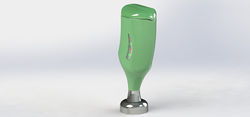
The next iteration involved finalising the shape of the body for the concept. Whilst this was drawn up, we explored various ideas for the top.


Jonathan Digby
Michael Rae
Michael Rae


Michael Rae
Michael Rae
Jonathan Digby
Tom Richards

Jonathan Digby
 |  |  |
|---|---|---|
 |  |  |
 |  |  |
Tom Richards


